Jed Clampett’s “Cement Pond” is No Joke: Why You Can’t Ignore Standing Roof Water
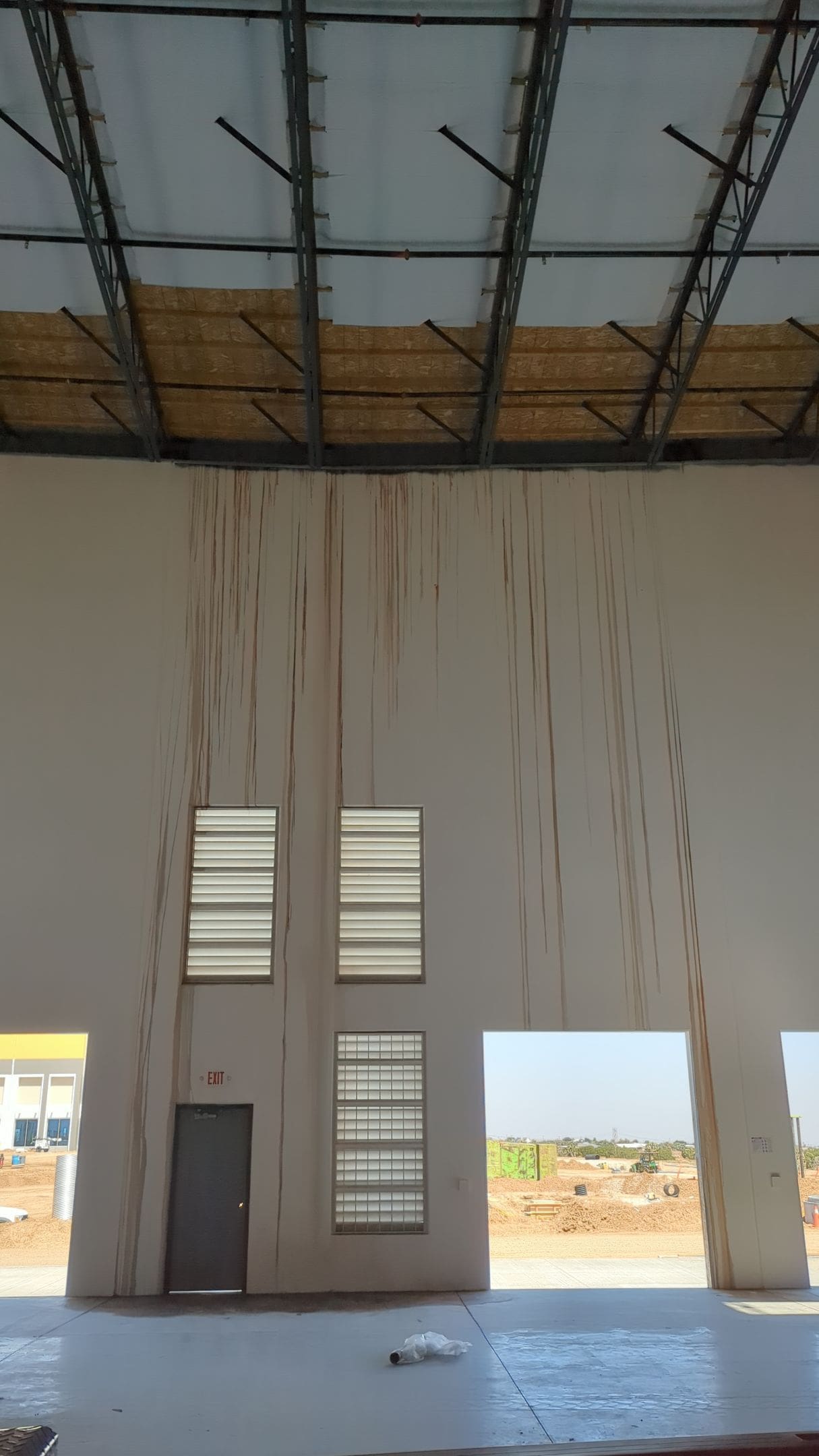
Ponding water is a building owner’s worst nightmare. Unaddressed, standing water instantly voids most manufacturer warranties within 48 hours. It accelerates membrane decay and threatens catastrophic structural damage. In California’s demanding climate, protecting commercial roofs is a financial imperative.
In the classic 1960s television sitcom The Beverly Hillbillies, the nouveau-riche Clampett family, upon moving into their opulent Bel-Air mansion, famously misnamed their luxurious swimming pool a “cement pond”. Led by the rustic charm of Granny and Jethro Bodine, the hillbillies were completely foreign to West Coast extravagance, translating “concrete pool” into “ce-ment pond”. To them, it was just a quirky, simple place to cool off.
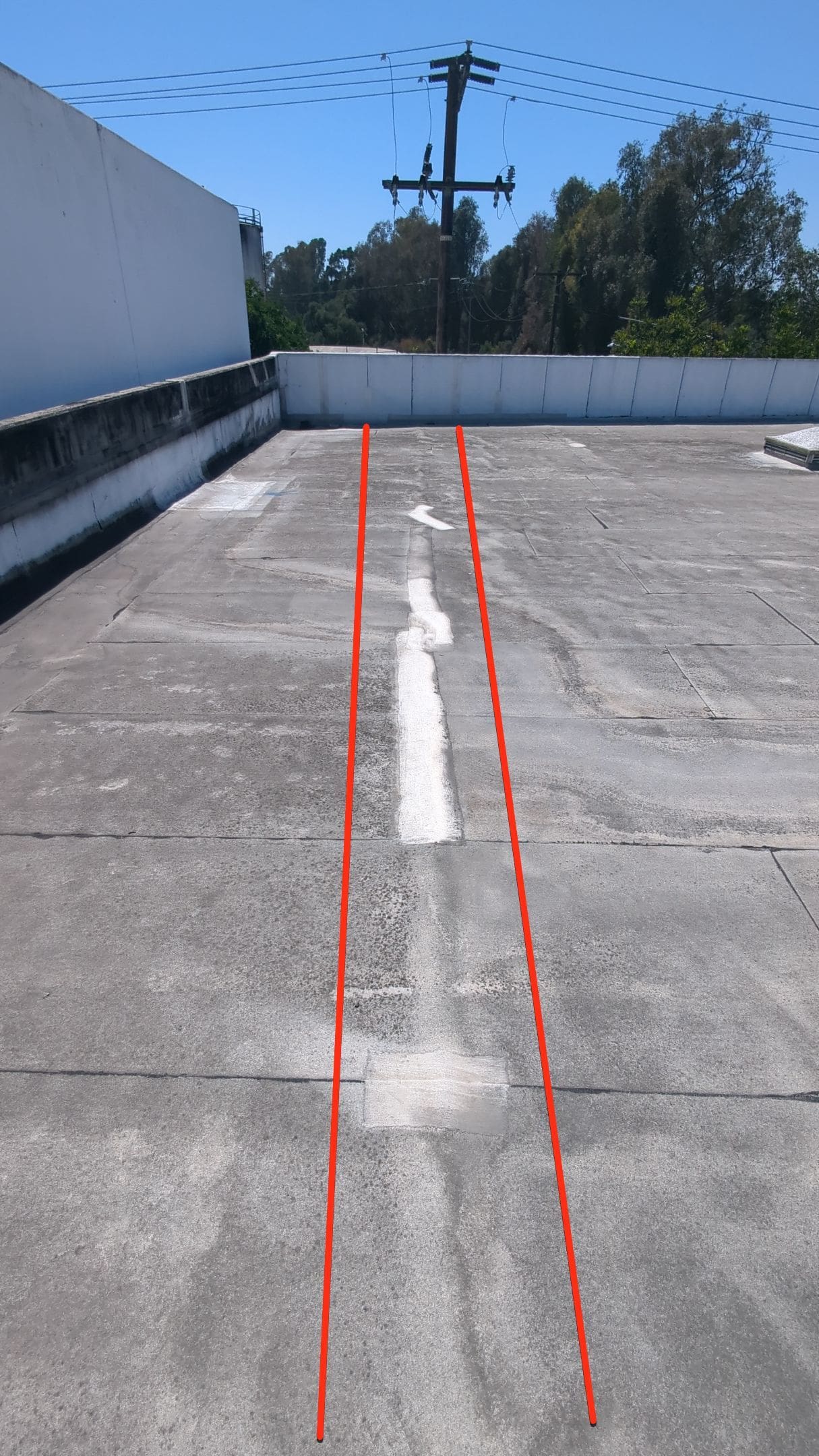
For a building owner or property manager, however, an unintentional “cement pond” on your commercial roof is the exact opposite of a luxury. It is a ticking time bomb. This blog explores the hidden, devastating costs of roof ponding and breaks down why addressing this problem is a top priority.
The 48-Hour Ultimatum: Warranty Voided
You might think a little rain or a clogged drain is just a minor annoyance. In the commercial roofing industry, it is widely understood that manufacturer warranties are legally binding contracts. Nearly all major roofing manufacturers write specific “ponding clauses” directly into their warranty agreements.
The fine print is universally unforgiving: if standing or ponding water is left unaddressed for 48 hours, the roofing warranty is voided.
Why such a rigid timeline? Manufacturers know the physics of a flat or low-slope roof. Water is an incredibly heavy substance. Over those two days, constant pooling exposes the roofing membrane to constant, unnatural hydrostatic pressure, UV ray magnification, and chemical breakdowns. When the membrane finally cracks or a seam fails, the manufacturer can—and will—deny your claim, leaving you to foot the entire replacement bill.
The Weight of Water: Structural Liability
Water is deceptively heavy. One cubic foot of water weighs approximately 62.4 pounds. If you have a 500-square-foot area of your roof pooling water to an average depth of just two inches, that is well over 5,000 pounds of localized weight bearing down on a small section of your facility.
Over time, this intense, un-engineered load leads to a phenomenon known as deck deflection. The roof structure begins to sag under the weight. As it sags, it creates a deeper “dish” which then holds even more water. This vicious cycle drastically increases the risk of catastrophic structural collapse. In California, where older commercial buildings may be dealing with aging metal, wood, or concrete decks, this excess weight is a severe safety and financial liability.
Membrane Decay and Thermal Shock
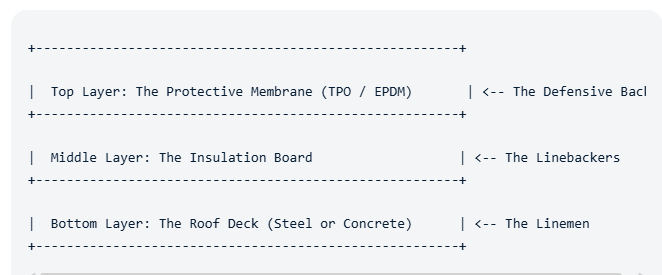
Commercial roofing membranes (such as TPO, EPDM, or Modified Bitumen) are engineered to withstand the elements, but they are not designed to be submerged permanently. Think of your roofing membrane like human skin; it can handle getting wet, but being constantly waterlogged leads to rapid deterioration.
Standing water sits in continuous contact with your membrane. As the California sun beats down on the roof, the water acts as a magnifying glass, intensifying UV rays and cooking the membrane beneath it. When night falls, temperatures drop, and this standing water cools down, causing the material to undergo thermal shock and continuous expansion and contraction.
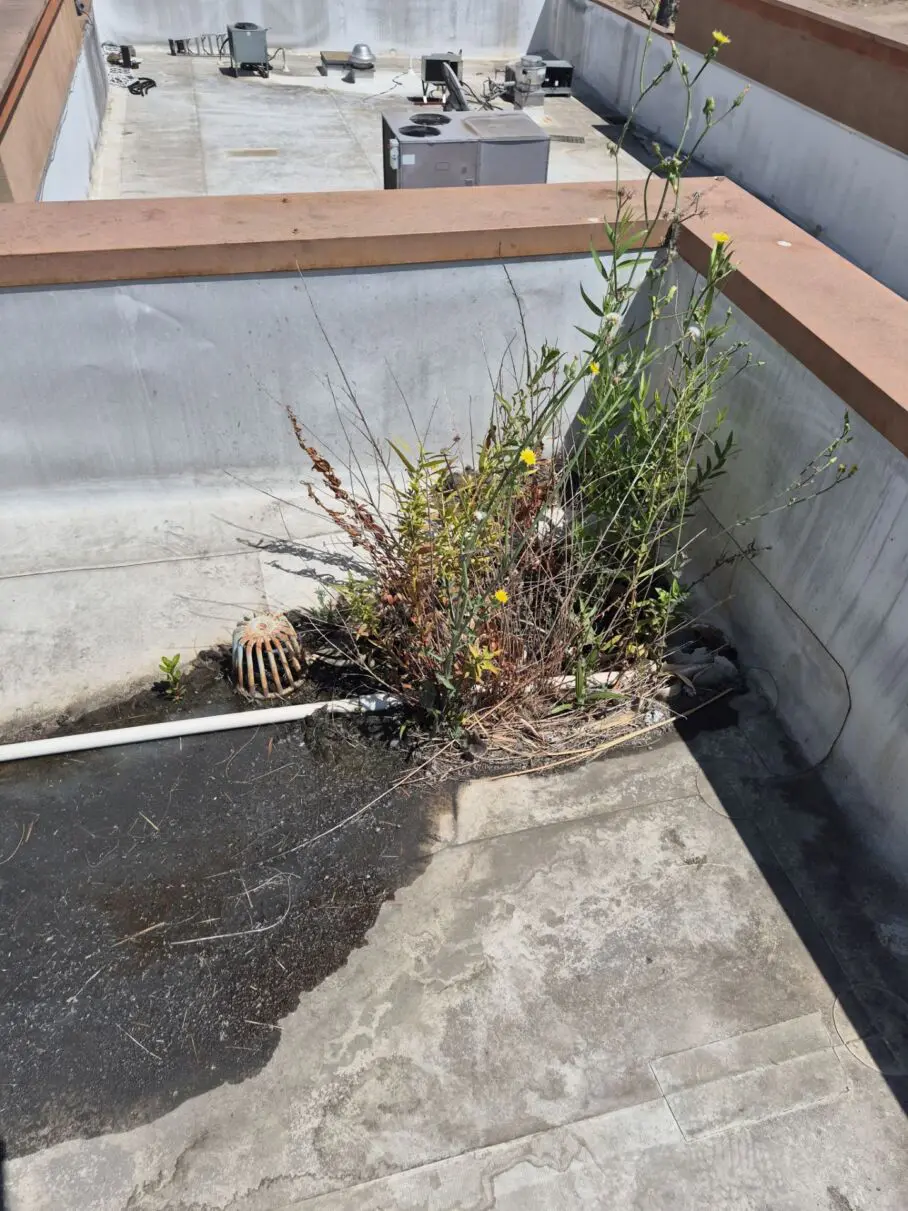
Additionally, ponding water creates a perfect incubator for environmental debris, dust, and airborne spores. Within days, algae, moss, and even small vegetation can take root in the standing water. Their roots eat away at the membrane, while organic acids break down the chemical composition of the roofing material, accelerating decay by years.
The Hidden Tax: Inflated Energy Bills
A lesser-known hidden cost of ponding water involves your facility’s energy efficiency. Water is an excellent conductor of heat. When water ponds on a roof, it compromises the thermal performance (R-value) of the underlying insulation. Heat transfer increases significantly. Your facility’s HVAC system is forced to work overtime to keep the building cool—a costly daily tax that inflates your monthly utility bills and puts unnecessary strain on your cooling equipment.
California Climate Challenges
California properties endure a unique set of weather challenges. We alternate between intense, baking sun during the summer and unpredictable winter atmospheric rivers or heavy seasonal downpours. The constant cycle of baking sun, followed by pooling water, followed by rapid evaporation, puts immense strain on roofing materials.
Furthermore, our state has rigorous environmental and building compliance codes. If a ponding roof leads to a catastrophic leak, the resulting interior water damage can ruin expensive inventory, halt business operations, and lead to mold and indoor air quality issues. For commercial property managers dealing with tenant leases, a roof failure can result in legal disputes, withheld rent, and tremendous reputational damage.
The Financial Math of Proactive Maintenance
The math behind commercial roofing is simple: proactive asset management is infinitely cheaper than crisis-level roof replacement. Ignoring a minor ponding issue on Monday could result in a voided warranty on Wednesday, a massive leak and structural failure by Friday, and a multi-hundred-thousand-dollar emergency replacement by the end of the quarter.
Replacing a commercial roof is not just a capital expenditure; it involves business interruptions, tenant disruptions, and potentially shutting down operations entirely. By catching ponding water early, you can often mitigate the damage through simple drain cleaning, minor structural re-sloping, or targeted roof repairs. This simple step extends the lifespan of your current roofing system, saves thousands of dollars in energy costs, and keeps your manufacturer warranties fully intact.
How We Can Help
For 70 years, our family of commercial roofing experts has been protecting California businesses. We have seen firsthand how small issues like ponding water escalate into major structural liabilities. Because we understand the complexities of both aging and modern commercial roof systems, we have developed a unique method to catch these hidden costs before they ruin your bottom line.
We are currently offering a FREE 6-Point Roof Asset Preservation and Compliance Assessment + Report for commercial building owners and property managers in California. (This comprehensive, on-site assessment is valued at $1,450).
***Because we dedicate highly specialized team members to these evaluations, this offer has limited availability and expires September 30, 2026.
Wondering where your building stands? Don’t wait for an interior ceiling collapse or tenant turnover. Click HERE to quickly schedule a 6 Point Roof Asset Preservation and Compliance Assessment + Report.
This Assessment Includes:
Membrane Integrity Analysis: Identify seam failures, punctures, blistering, weathering, and membrane deterioration before they become leaks.
Roof Surface & Substrate Assessment: Evaluate the roof surface for soft areas, ponding water, localized deflection, deteriorated insulation, and other visible conditions that may indicate underlying roofing deficiencies.
Flashing & Perimeter Inspection: Inspect parapet walls, coping, counterflashing, expansion joints, and termination points—the most common sources of roof leaks.
Rooftop Equipment & Penetration Review: Evaluate HVAC curbs, pipes, vents, skylights, and equipment flashings to help ensure the building envelope remains watertight.
Drainage Performance Assessment: Inspect drains, scuppers, gutters, overflow systems, and roof slope to identify ponding conditions and drainage deficiencies that accelerate roof deterioration.
Roof System Performance Evaluation: Assess the overall condition of the roofing system, including weathering, aging, previous repairs, and maintenance history to estimate remaining service life and identify opportunities to improve long-term roof performance.
Included in our Eight-Fold Comprehensive Report:
Comprehensive roof condition report
High-resolution annotated photographs
Documented deficiencies and observations
Recommended corrective actions
Estimated roof service life
Repair priority ranking
Capital Planning Assistance: We will build you a multi-year budget forecast for your roof, making it easy for you to present funding requests to executives or board members.
Proactive Maintenance Program: A complimentary first year of preventative maintenance for multi-year service agreement program enrollees.
***Don’t wait for your roof to turn into a destructive “cement pond”—secure your facility’s structural integrity and financial future today.
Disclaimer: These assessments consist of a visual inspection of accessible roof areas and are intended to evaluate the observable condition of the roofing system. They are not a structural engineering evaluation or an invasive investigation. Conditions concealed within the roof assembly or building structure may require additional evaluation by the appropriate design professional.
The schedule page is quick and simple. However, if you need clarification or would like to speak with a real person, you can reach me directly:
David Price, VP of Sales & Marketing
Call or text: 951.530.0881
Email: david@saddlebackroofing.com
Schedule Your
Free 6-Point
Commercial Roof Asset Preservation
and Compliance Assessment + Report
Prevent Failures Before They Disrupt Your Business!
Email: info@saddlebackroofing.com
Phone: (833) 766-3012
This offer is LIMITED to schedule availability
***(Normally $1,450) Available inspection spots are filling up quickly