The 2026 Code Panic: Why Every California Reroof Just Got Drenched in Reflective White Paint
The Great 2026 Code Awakening
Imagine you are trying to bake a pizza in a pitch-black oven, and somebody suddenly flips on a flashlight. That flashlight is the state of California, and the oven is your flat-roofed commercial building. Overnight, the California Energy Commission (CEC) has essentially ordered a massive paint party, and everything is getting painted blindly blinding white to beat the heat.
For seven decades, Saddleback Roofing has seen it all. From asphalt, rolled out modified bitumen, sprayed foam, and welded PVC. But then, January 1, 2026, rolled around, bringing the 2025 Title 24 Energy Code Part 6 with it.
Here is the punchline to a very bureaucratic, very serious joke: California just made every major reroof a cool-roof job overnight, and it applies statewide.
Let us break it down:
• The Old Way: You replaced your roof when it leaked. You put on whatever roof made sense.
• The 2026 Way: You replace your roof when it leaks. The state steps in and legally mandates a minimum 3-year aged Solar Reflectance (SR) and Thermal Emittance (TE).
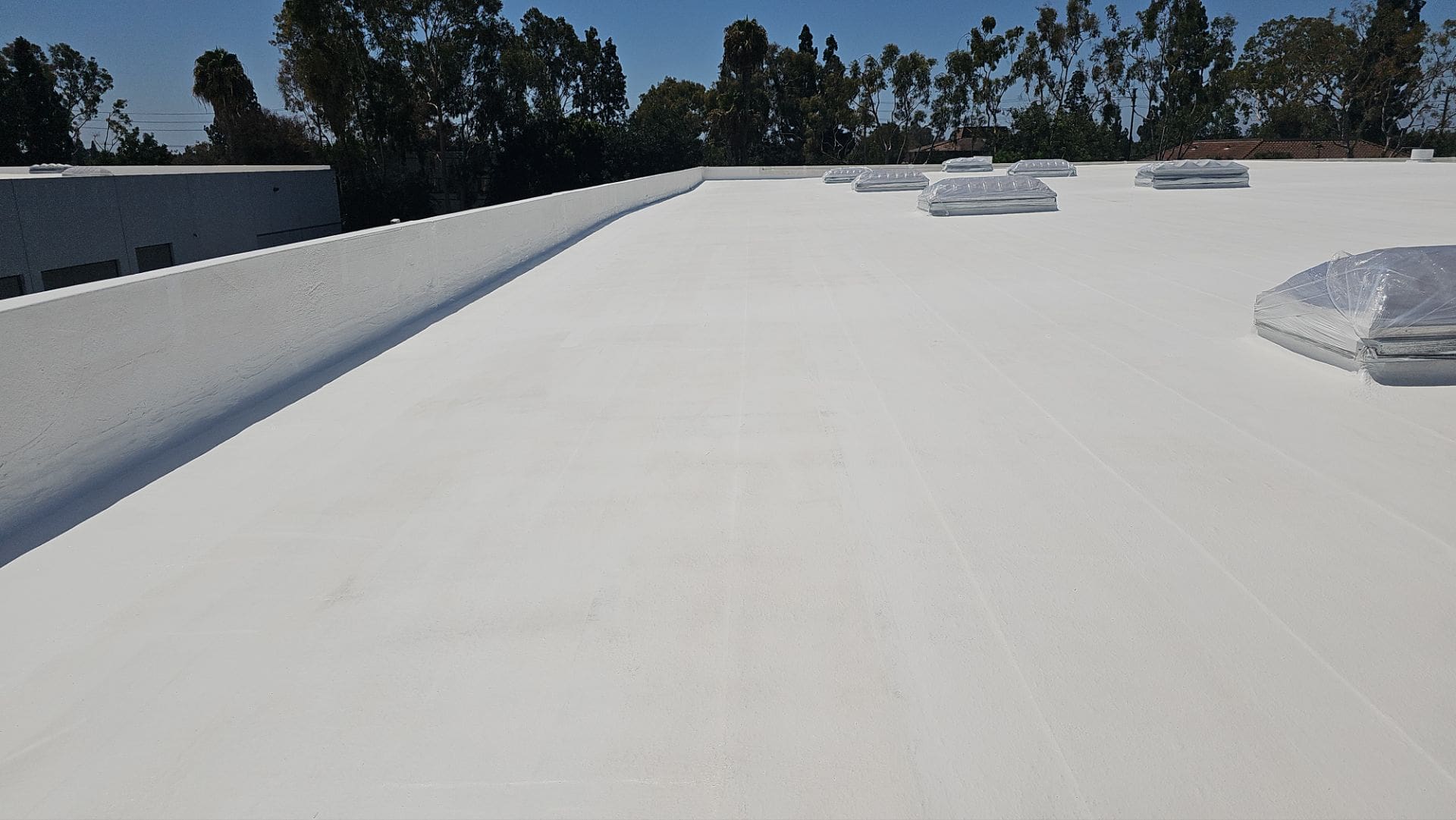
Basically, with these new California commercial roofing standards, your roof now has to act like a giant, reflective mirror pointing at the sky. In fact, your roof is so reflective now that passing astronauts might need to wear sunglasses, or passing airplanes might use it as an accidental runway! Yes, it is that blindingly bright.
And Title 24 compliance is no joke.
Why the CEC Hit the Panic Button
Why did the state force this overnight, one-time, market-wide demand surge? It all comes down to the Urban Heat Island Effect. When you have miles and miles of black, tar-heavy commercial roofs baking in the California sun, they soak up heat like a sponge and release it at night. This bakes the surrounding cities, drives up air conditioning costs, and puts immense strain on the state’s power grid.
To stop this architectural oven effect, the Title 24 Energy Standards are now demanding that every nonresidential building with a low-slope roof that is undergoing a re-roof or re-cover (covering more than 50% of the roof) must legally meet an SRI of roughly 75.
What does SRI stand for? It stands for Solar Reflectance Index. It is a fancy math equation that measures how hot a roof surface gets when exposed to sunlight. An SRI of 75 means the surface reflects a massive amount of solar heat and quickly releases the little bit of heat it does absorb.
What This Means for Your Reroof Budget
Let us be real for a second. This code change completely disrupts the way we do business. We aren’t just putting a roof on; we are fundamentally altering the way the building interacts with the environment. Every commercial building owner now has to calculate exactly how much sunlight their roof bounces off.
It gets even more technical when you look at how this impacts your roofing contractor. Because the code is highly specialized, it maps exactly to a Title-24-native contractor. You can’t just hire any fly-by-night roofer to slap down a single-ply membrane or an acrylic coating. When it comes to cool roof reflectance and emittance, you need a contractor who understands the Cool Roof Rating Council (CRRC) certified rated roof products. They need to verify that the roofing material has a visible packaging label listing the emittance, the initial, and the 3-year aged solar reflectance.
If your contractor doesn’t understand these complex metrics, your building will fail inspection. And nobody wants to be the building owner who has to tear off a brand-new roof because the paint wasn’t reflective enough to satisfy Title 24!
The Hidden Monster: Commercial Roof Insulation Requirements
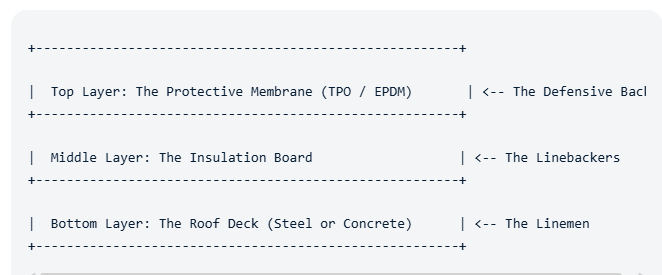
You thought the reflective paint was the only surprise? Welcome to the insulation portion of the code. The 2025 Energy Code did not just dictate the color and reflectiveness of your roof; it completely overhauled the thermal resistance (R-value) requirements to ensure that buildings stop bleeding heat through the top.
Whenever you do a roof alteration, replacement, or recover, you must meet the mandatory minimum prescriptive roof insulation requirements. The code treats insulation as a cost-effective way to reduce energy use across all 16 California climate zones. The exact R-values you are legally required to install above your roof deck will vary depending exactly on your location. Here is a breakdown of the prescriptive minimum continuous insulation (\(R\text{-}ci\)) values required for a nonresidential low-slope roof in California, which are determined directly by California climate zone roofing mandates:
• Climate Zones 1, 3, 5, 11, 13, 14, and 16: You are required to use a minimum of \(R\text{-}30\) continuous insulation above the roof deck.
• Climate Zones 2, 4, 6, 8, 9, 10, 12, and 15: You are required to use a minimum of \(R\text{-}23\) continuous insulation above the roof deck.
What if you are using a combination of continuous insulation and cavity insulation? The code allows for a U-factor compliance path (e.g., U-0.037) as long as your roof assembly includes an absolute minimum of \(R\text{-}10\) continuous insulation installed above the deck to avoid thermal bridging.
If you fail to include this insulation in your reroof, your project will be stopped in its tracks. This requires decision-makers to rethink their budget. A standard recover job just became a tear-off-and-insulate job overnight.
Cool Roof Maintenance Tips
Now that you have this incredibly expensive, highly reflective, hyper-insulated roof, how do you make sure it stays compliant over the years? Cool roofs lose their effectiveness if they are covered in dust, debris, bird droppings, or commercial grime. To keep your SRI levels up and pass your energy inspections, you need to employ strict maintenance tips:
1. Schedule Regular Roof Washes: Dirt is the enemy of solar reflectance. At least once a year, hire a commercial roofing contractor to wash the reflective membrane or coating using an approved, non-abrasive cleaning agent.
2. Avoid Walking Heavy on the Roof: Excessive foot traffic can scuff membranes and track dirt onto the reflective surface. Designate specific walkways and restrict access.
3. Proactive Leak Inspections: Even tiny cracks can allow water to compromise the underlying continuous insulation. When the insulation gets wet, its R-value plummets.
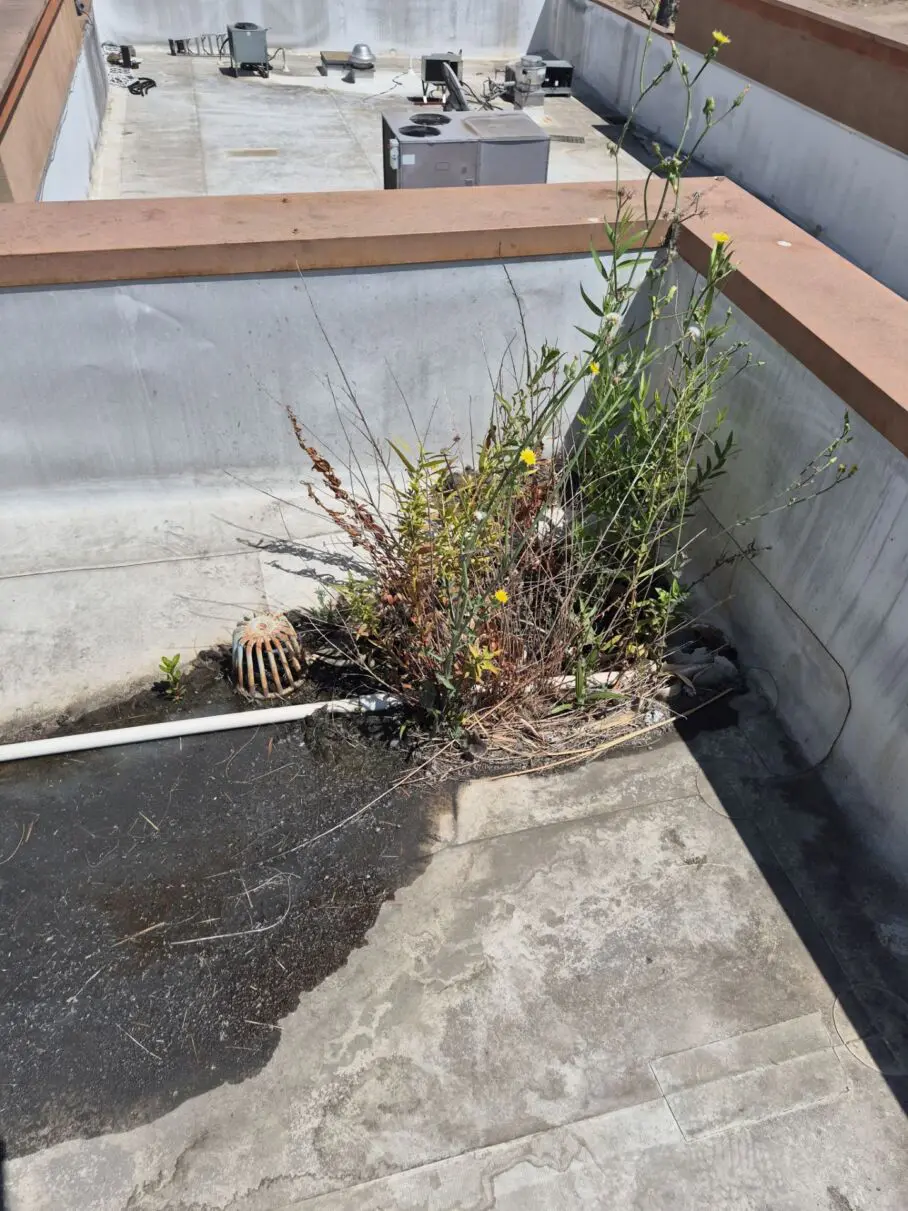
4. Repair Puddles (Ponding Water): Water ponding in low areas will collect dust and accelerate the degradation of reflective coatings. Keep your drains clear.
5. Re-coating Intervals: Reflective roof coatings do not last forever. Depending on the product, plan for maintenance re-coats every 5 to 10 years to maintain that required aged solar reflectance.
The Bottom Line for 2026 and Beyond
The 2025 Title 24 Energy Code, effective January 1, 2026, has permanently rewritten the rules of commercial roofing in California. We are no longer just installing waterproof barriers; we are building energy-generating, heat-reflecting thermal envelopes. The mandatory SRI 75 requirement, combined with strict continuous insulation mandates, means that every single major reroof requires an engineered approach from a licensed, highly qualified commercial roofing firm.
Do not get left in the dark—or rather, do not get caught in the blinding light—when the code inspectors come knocking.
How We Can Help
Since 1956, here at Saddleback Roofing, we’ve been protecting California businesses. We are currently offering a FREE 6-Point Roof Asset Preservation and Compliance Assessment + Report. (This comprehensive, on-site assessment is valued at $1,450). Subject to schedule availability (it is limited and this offer expires September 30, 2026).
***Because we dedicate highly specialized team members to these evaluations, this offer has limited availability.
Wondering where your building stands? Don’t wait until material and labor costs increase due to this new law (taxing the supply and demand quotient) making your decision even harder, click HERE to quickly schedule a 6 Point Roof Asset Preservation and Compliance Assessment + Report for your buildings.
Our assessment includes:
Membrane Integrity Analysis: Identify seam failures, punctures, blistering, weathering, and membrane deterioration before they become leaks.
Roof Surface & Substrate Assessment: Evaluate the roof surface for soft areas, ponding water, localized deflection, deteriorated insulation, and other visible conditions that may indicate underlying roofing deficiencies.
Flashing & Perimeter Inspection: Inspect parapet walls, coping, counterflashing, expansion joints, and termination points—the most common sources of roof leaks.
Rooftop Equipment & Penetration Review: Evaluate HVAC curbs, pipes, vents, skylights, and equipment flashings to help ensure the building envelope remains watertight.
Drainage Performance Assessment: Inspect drains, scuppers, gutters, overflow systems, and roof slope to identify ponding conditions and drainage deficiencies that accelerate roof deterioration.
Roof System Performance Evaluation: Assess the overall condition of the roofing system, including weathering, aging, previous repairs, and maintenance history to estimate remaining service life and identify opportunities to improve long-term roof performance.
Included in our Eight-Fold Comprehensive Report:
Comprehensive roof condition report
High-resolution annotated photographs
Documented deficiencies and observations
Recommended corrective actions
Estimated roof service life
Repair priority ranking
Capital Planning Assistance: We will build you a multi-year budget forecast for your roof, making it easy for you to present funding requests to executives or board members.
Proactive Maintenance Program: A complimentary first year of preventative maintenance for multi-year service agreement program enrollees.
Disclaimer: These assessments consist of a visual inspection of accessible roof areas and are intended to evaluate the observable condition of the roofing system. They are not a structural engineering evaluation or an invasive investigation. Conditions concealed within the roof assembly or building structure may require additional evaluation by the appropriate design professional.
The schedule page is quick and simple. However, if you need clarification or would like to speak with a real person, you can reach me directly:
David Price, VP of Sales & Marketing
Call or text: 951.530.0881
Email: david@saddlebackroofing.com
Schedule Your
Free 6-Point
Commercial Roof Asset Preservation
and Compliance Assessment + Report
Prevent Failures Before They Disrupt Your Business!
Email: info@saddlebackroofing.com
Phone: (833) 766-3012
This offer is LIMITED to schedule availability
***(Normally $1,450) Available inspection spots are filling up quickly