The Ultimate Stadium Defense: Commercial Roofing Explained with Football, Fun, and Financial Nightmares
Imagine you are the head coach of a championship football team. You have the best quarterback, lightning-fast wide receivers, and a stadium packed with eighty thousand screaming fans. But right before kickoff, you look at your defensive line and notice they are not wearing helmets or pads. In fact, they are just a bunch of cardboard cutouts taped together.
That is exactly what a commercial roofing system looks like when building owners try to ignore it.
To a ten-year-old, a commercial roof might just seem like a massive, flat playground where nobody lets you play. But to the executives, property managers, and corporate decision-makers running the building below, that roof is the ultimate defensive line. If the defense breaks down, the opposing team—composed of torrential rain, roasting summer heat, freezing snow, and chaotic winds—will storm the field.
When your roof fumbles, your entire business takes a crushing tackle that can cost hundreds of thousands of dollars. Let’s break down how commercial roofing works using the greatest sport on earth, and why ignoring your roof is the scariest decision a business leader can ever make.
Meet the Defensive Line: The Layers of Your Roof
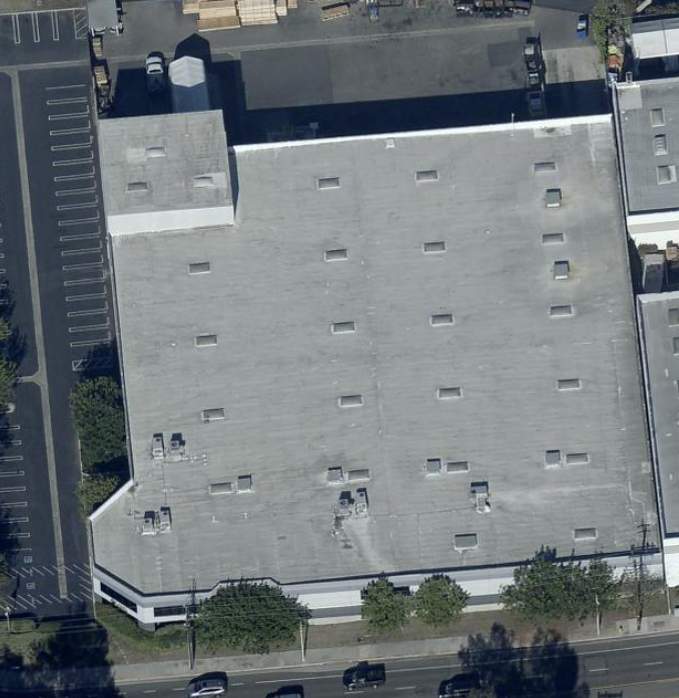
A house roof is usually pointy and covered in shingles. It looks like a classic triangle. But a commercial roof is flat or low-sloped. Because it covers a giant space—like a school, a warehouse, or an actual NFL stadium—it cannot just rely on gravity to slide water off the sides. It requires a complex, multi-layered defensive strategy.
Think of these layers as the starting lineup guarding your building’s inner treasures (like expensive computers, inventory, and dry employees).
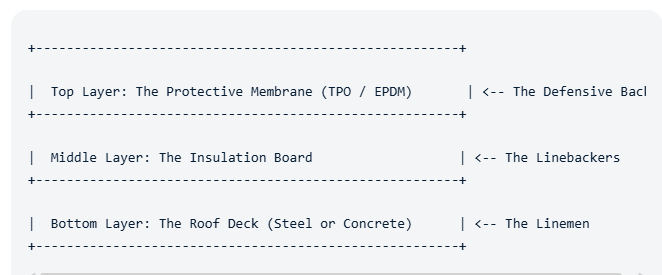
1. The Defensive Linemen: The Roof Deck
This is the heavy-duty base layer made of tough steel or thick concrete. It holds up everything else, including giant, heavy air conditioning units that weigh as much as an elephant. If this layer fails, the whole stadium caves in.
2. The Linebackers: The Insulation
In the middle, we have giant foam blocks. They act like padding to stop the sun’s scorching heat from roasting the building inside. Without good linebackers, your energy bills skyrocket, and your building sweats like a player doing two-a-days in August.
3. The Cornerbacks and Safeties: The Waterproof Membrane
This is the outer skin. It is usually a high-tech rubber or plastic sheet called TPO (Thermoplastic Polyolefin) or EPDM (synthetic rubber). It keeps the rain from breaking through. If water gets past this layer, it is an automatic touchdown for the environment, and a total disaster for your wallet.
The Horror Movie Under the Synthetic Rubber
Now, this is the part where the corporate decision-makers need to cover their eyes. When a kid plays football and gets a tiny tear in their jersey, mom patches it up, and they head back out. No big deal. When a commercial roof gets a tiny tear, a silent, invisible monster crawls inside.
The Slow-Motion Tsunami
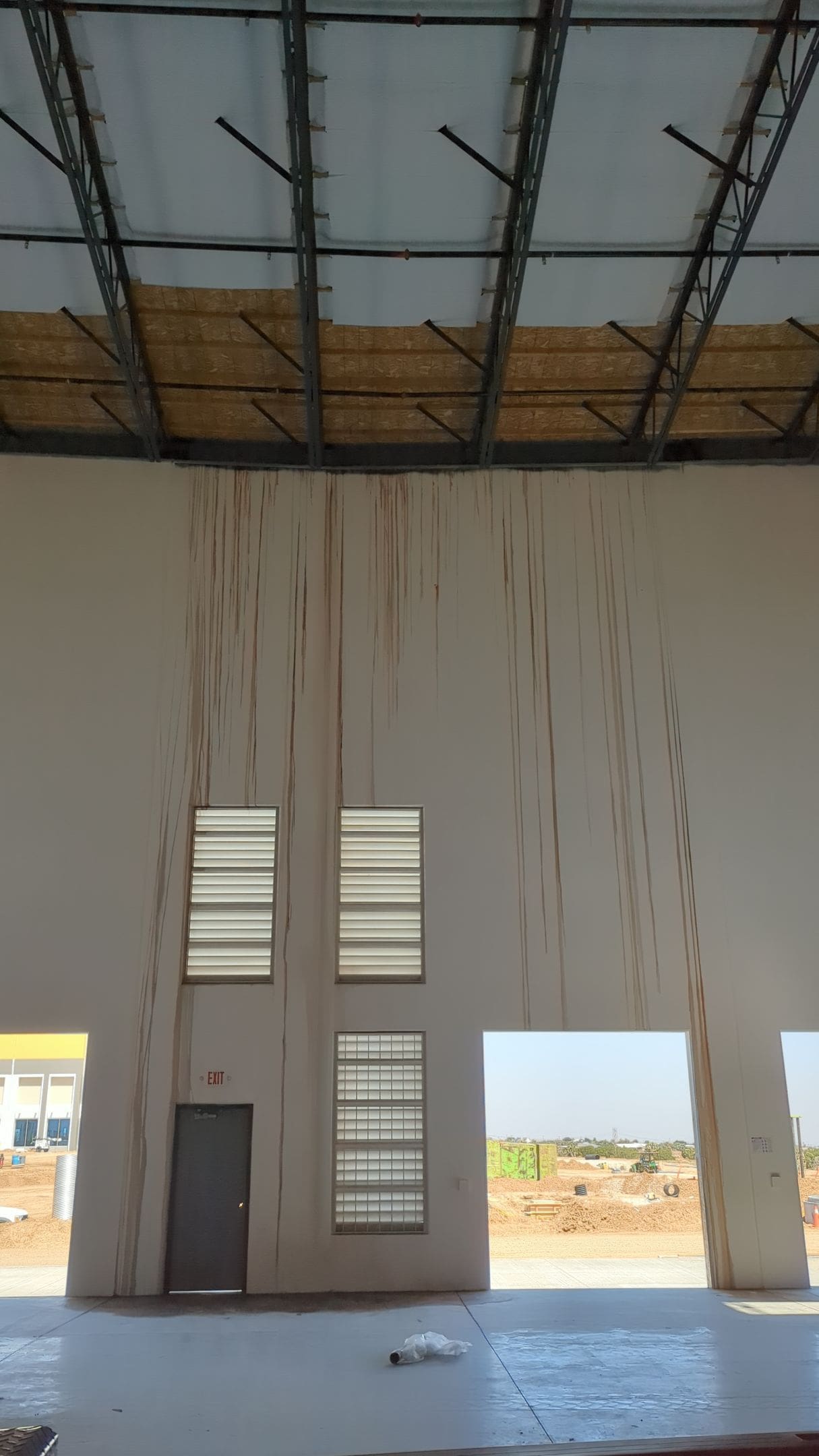
Commercial roofs are flat, which means water can pool in giant puddles if the drains block up. If there is a microscopic hole in the membrane, water will sneak into the insulation. It does not just drip down immediately like a cartoon leak. Instead, it acts like a giant sponge, trapping thousands of gallons of water directly above your operations.
The Weight Nightmare: Water weighs 8.34 pounds per gallon. If your flat roof accumulates a massive pond because the drainage system failed, you are adding thousands of pounds of unplanned stress to the structural deck.
The Sudden Collapse: One day, you are sitting in your pristine executive office chair, approving spreadsheets. The next second, the entire ceiling structure snaps under the weight of trapped water, sending structural beams, wet insulation, and mud crashing straight through your desk.
The Invisible Employee Killer: Toxic Mold
Once water sits inside that warm, dark insulation layer, it breeds mold. This is not the fuzzy stuff on an old piece of bread. This is industrial-strength, toxic mold that gets into the building’s air conditioning vents.
Imagine having to shut down your entire facility, evacuate your workforce, and face massive legal liabilities because your neglected roof turned the corporate office into a biohazard zone. That is an interception you can never recover from.
The Cost of a Penalty: The Rule Book of Commercial Repairs
In football, a penalty pushes you back fifteen yards. In commercial real estate, a roofing penalty pushes your corporate budget back into the prehistoric era.
Decision-makers love to say, “Let’s just patch it up next year. It looks fine from the ground!”
But you cannot see a commercial roof from the ground. It is a silent liability. Let’s look at the actual stats of what happens when you treat roofing asset management like a guessing game.
Roofing Action The Football Equivalence The Financial Impact on Your Company
Preventative Inspections (2x Year) Watch game film to spot weaknesses. Pennies per square foot. Finds small tears before they flood the computer server room.
Minor Patchwork & Drain Clearing Swapping out a cracked helmet between plays. Minimal budget impact. Keeps water moving off the building seamlessly.
Neglecting the Leak for 3 Years Letting the opposing team run straight up the middle. Catastrophic. Water logged insulation, ruining energy efficiency and rotting the steel deck.
Full Emergency Replacement Forfeit the season, fire the coach, and rebuild the stadium. Hundreds of thousands of dollars. Total capital expenditure nightmare ruins profitability.
The 25% Rule Threat
In many construction code frameworks, there is a terrifying law known as the 25% Rule. It states that if more than 25% of a roof surface is damaged or water-logged, you are legally forbidden from simply patching it up. You are forced by building inspectors to do a complete tear-off and replacement.
By ignoring that single trickle of water near the warehouse bay doors, you are actively choosing to let the damage spread until a simple repair turns into a mandatory, budget-obliterating corporate mandate.
How to Coach Your Roof to a Championship
You do not need to become a roofing scientist to protect your building, just like a ten-year-old does not need to know the entire NFL playbook to enjoy Sunday football. You just need to follow three basic coaching rules to ensure your asset remains a fortress.
Rule 1: Stop Walking on the Field Unprotected
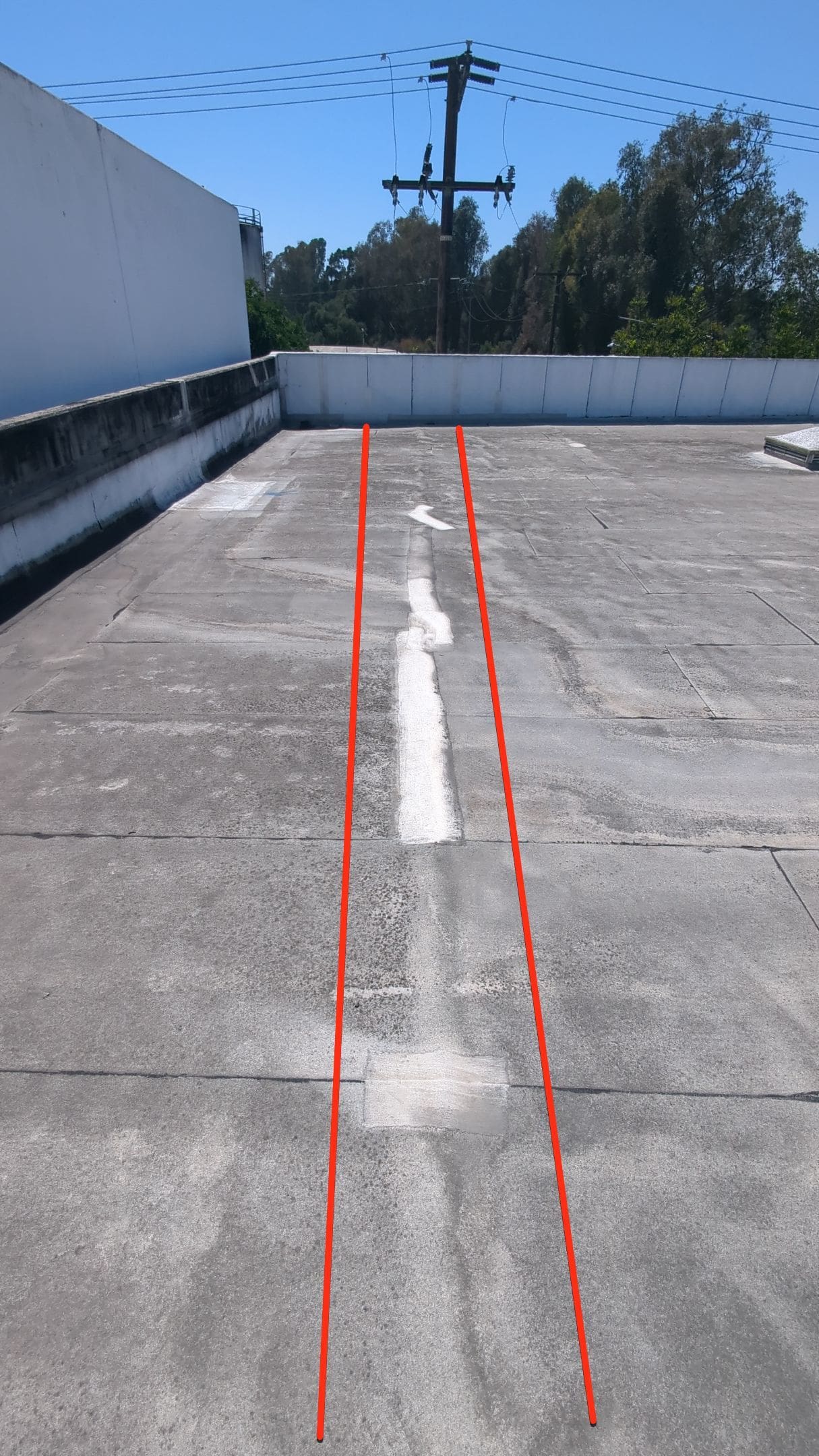
Commercial roofs are sensitive. When technicians drag heavy tools across the roof to fix HVAC systems, or when workers step on areas not protected by walk pads, they can puncture the membrane. Treat your roof like a pristine grass stadium field. Keep unauthorized foot traffic away, and map out designated pathways for maintenance workers.
Rule 2: Keep the Drains Clear of Interceptions
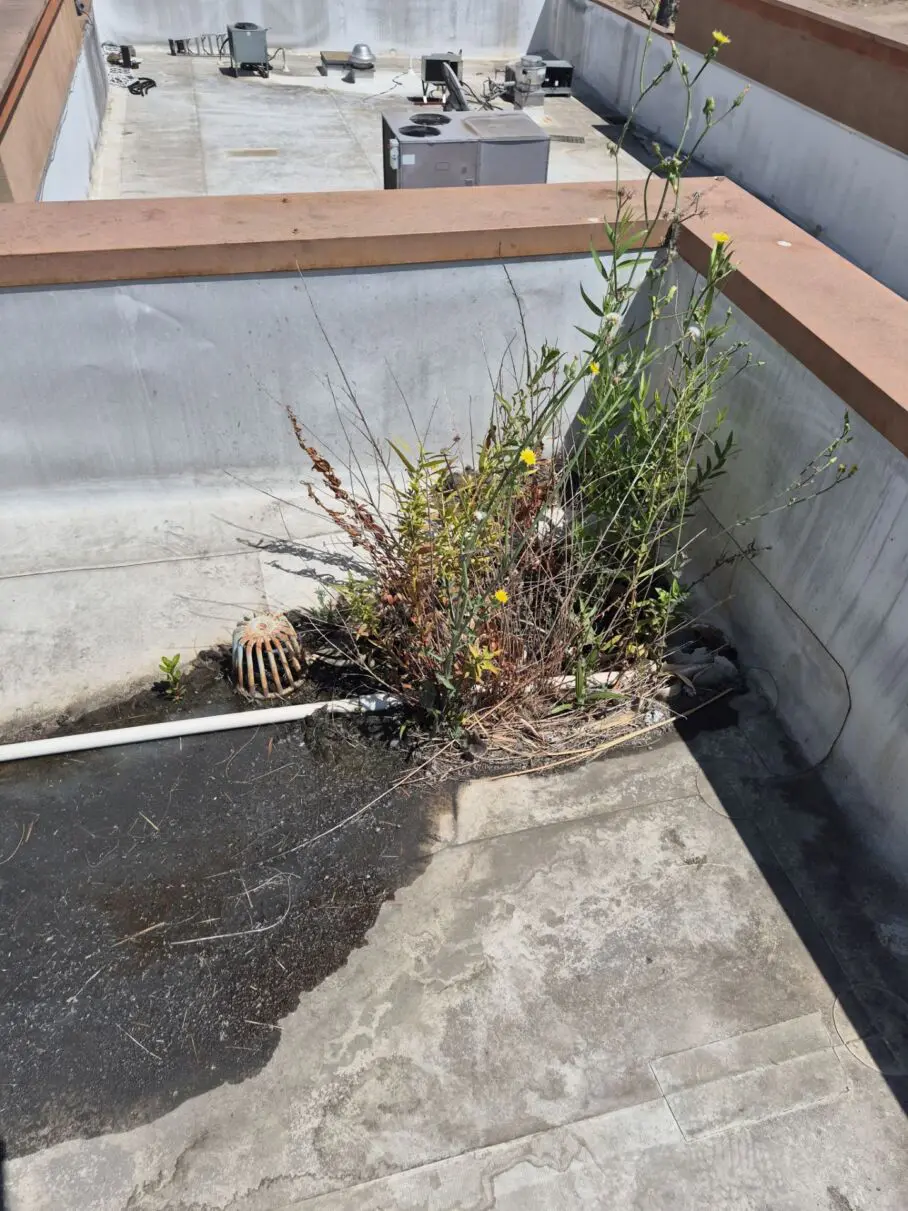
A commercial roof behaves like a managed water management system. It uses gutters, scuppers, and internal drains to pump rain away. If autumn leaves, rogue plastic bags, or nesting birds clog those drains, your roof converts into a massive, heavy swimming pool. Ensure your maintenance crews clear the drainage pathways before severe storm seasons hit.
Rule 3: Fire the Cheap “Handymen”
Do not hire a random contractor with a pickup truck and a bucket of tar to fix a complex, engineered commercial roofing system. Commercial single-ply membranes require hot-air welding equipment and certified commercial technicians to properly seal seams. A bad patch job is nothing more than a cosmetic band-aid on a broken bone.
Final Whistle: Don’t Let Your Roof Bench Your Business
To a kid, a roof leak means putting a plastic bucket on the floor and listening to the funny plop, plop, plop sound.
To a business owner, a roof leak means ruined inventory, electrical short circuits, halted assembly lines, furious clients, shattered revenue goals, and millions of dollars literally washing down the drain.
Your commercial roof is working twenty-four hours a day, seven days a week, standing up to the brutal elements so your business can score touchdowns inside. Stop treating it like an afterthought. Schedule a certified commercial inspection, get ahead of the hidden moisture, and secure your defensive line before the sky decides to open up and ruin your fiscal year.
Consider our company Saddleback Roofing.
We are currently offering a 6 Point Comprehensive Roof Maintenance Assessment and an 8-fold report. We normally charge $1,450 for it but we are offering it completely free but is subject to available schedule and this offer expires October 31, 2026.
Membrane Integrity Analysis: Identify seam failures, punctures, blistering, weathering, and membrane deterioration before they become leaks.
Roof Surface & Substrate Assessment: Evaluate the roof surface for soft areas, ponding water, localized deflection, deteriorated insulation, and other visible conditions that may indicate underlying roofing deficiencies.
Flashing & Perimeter Inspection: Inspect parapet walls, coping, counterflashing, expansion joints, and termination points—the most common sources of roof leaks.
Rooftop Equipment & Penetration Review: Evaluate HVAC curbs, pipes, vents, skylights, and equipment flashings to help ensure the building envelope remains watertight.
Drainage Performance Assessment: Inspect drains, scuppers, gutters, overflow systems, and roof slope to identify ponding conditions and drainage deficiencies that accelerate roof deterioration.
Roof System Performance Evaluation: Assess the overall condition of the roofing system, including weathering, aging, previous repairs, and maintenance history to estimate remaining service life and identify opportunities to improve long-term roof performance.
It also includes the following eightfold comprehensive report:
Comprehensive roof condition report
High-resolution annotated photographs
Documented deficiencies and observations
Recommended corrective actions
Estimated roof service life
Repair priority ranking
Capital Planning Assistance: We will build you a multi-year budget forecast for your roof, making it easy for you to present funding requests to executives or board members
Proactive Maintenance Program: A complimentary first year of preventative maintenance for multi-year service agreement program enrollees
Disclaimer: Keep in mind with these assessments, they consist of a visual inspection of accessible roof areas and is intended to evaluate the observable condition of the roofing system. It is not a structural engineering evaluation or an invasive investigation. Conditions concealed within the roof assembly or building structure may require additional evaluation by the appropriate design professional.
If you’d like to get on our schedule click HERE and it will take you to our 6-Point Commercial Roof Asset Preservation and Compliance Assessment + Report schedule page.
The schedule page is quick and simple. However, if you need clarification or would like to speak with a real person, you can reach me directly:
David Price, VP of Sales & Marketing
Call or text: 951.530.0881
Email: david@saddlebackroofing.com
Schedule Your
Free 6-Point
Commercial Roof Asset Preservation
and Compliance Assessment + Report
Prevent Failures Before They Disrupt Your Business!
Email: info@saddlebackroofing.com
Phone: (833) 766-3012
This offer is LIMITED to schedule availability
***(Normally $1,450) Available inspection spots are filling up quickly