The 2026 El Niño Warning: Why California Commercial Roofs Are Sitting Ducks Right Now
It is the end of August 2026. The sun is shining across California, the asphalt in your parking lot is radiating summer heat, and rain feels like a distant memory. If you manage or own a commercial building, your mind is likely on tenant comfort, cooling costs, or fiscal year budgets—not on water leaking through your roof deck.
That complacency is a multi-thousand-dollar trap.
Right now, your roof is basically a giant solar panel baking a tray of imaginary cookies, and the only thing “flooding” your mind is how much iced coffee you can consume before your heart starts vibrating. It is hard to look at a sky so blue it hurts and think, “Yes, what this building needs is a comprehensive internal audit of its drainage system.” Denial is a beautiful, sun-drenched beach, and right now, most property managers are firmly parked on it with a beach towel, ignoring the meteorological monster movie currently being filmed out in the Pacific.
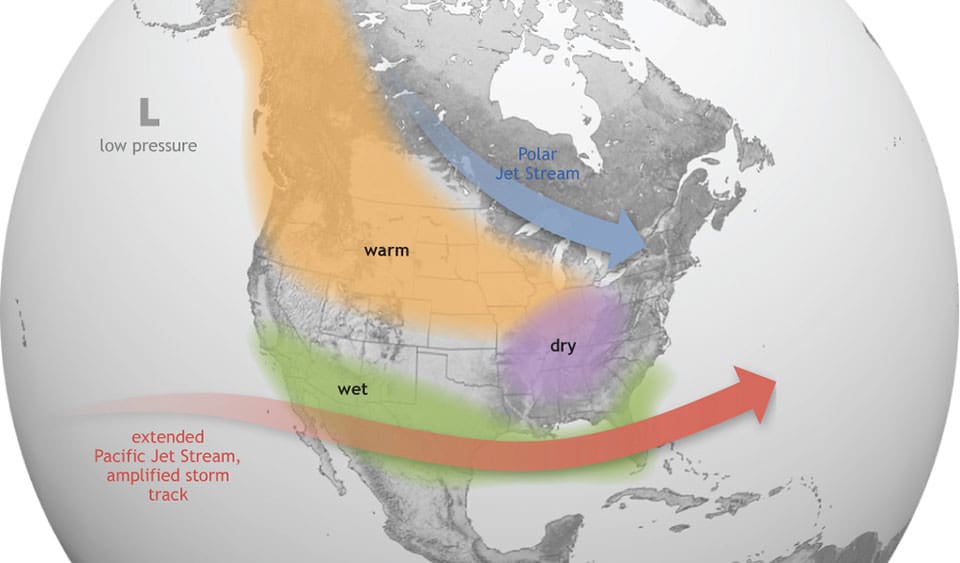
According to the National Oceanic and Atmospheric Administration (NOAA) Climate Prediction Center, federal scientists are tracking a rapidly intensifying El Niño pattern with an overwhelming likelihood of reaching “very strong” status this fall and winter. Some climate models indicate this event could rival or exceed the most intense weather cycles on record. For California, this means a dramatic shift from our forgiving dry months into a barrage of intense atmospheric rivers and heavy downpours between late autumn and early spring.
Yet, because it is not the rainy season, many commercial decision-makers are delaying basic property maintenance. They assume that if a roof isn’t dripping today, it will hold up fine tomorrow.
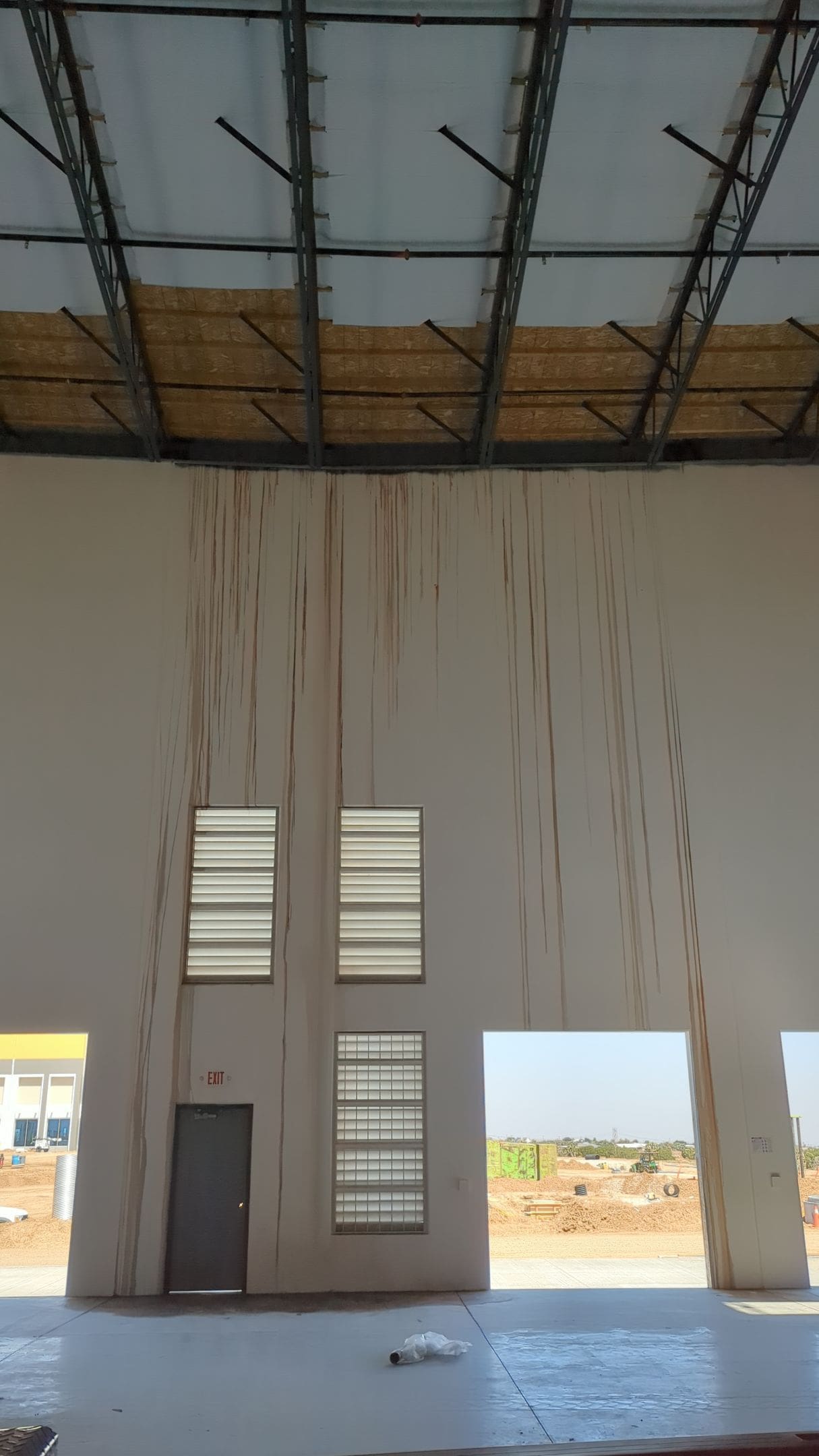
As commercial roofing professionals working right here in California, we see the fallout of this mindset every single year. A roof that looks pristine from the parking lot can harbor invisible, compounding failures. When an El Niño storm drops inches of rain in 48 hours, those hidden weaknesses break wide open.
This guide explores why dry-season complacency puts your commercial assets at risk, what a super El Niño actually demands from a low-slope or flat roof, and why scheduling an assessment right now is the smartest operational decision you can make this quarter.
The False Security of August: Why Sunny Days Mask Damage
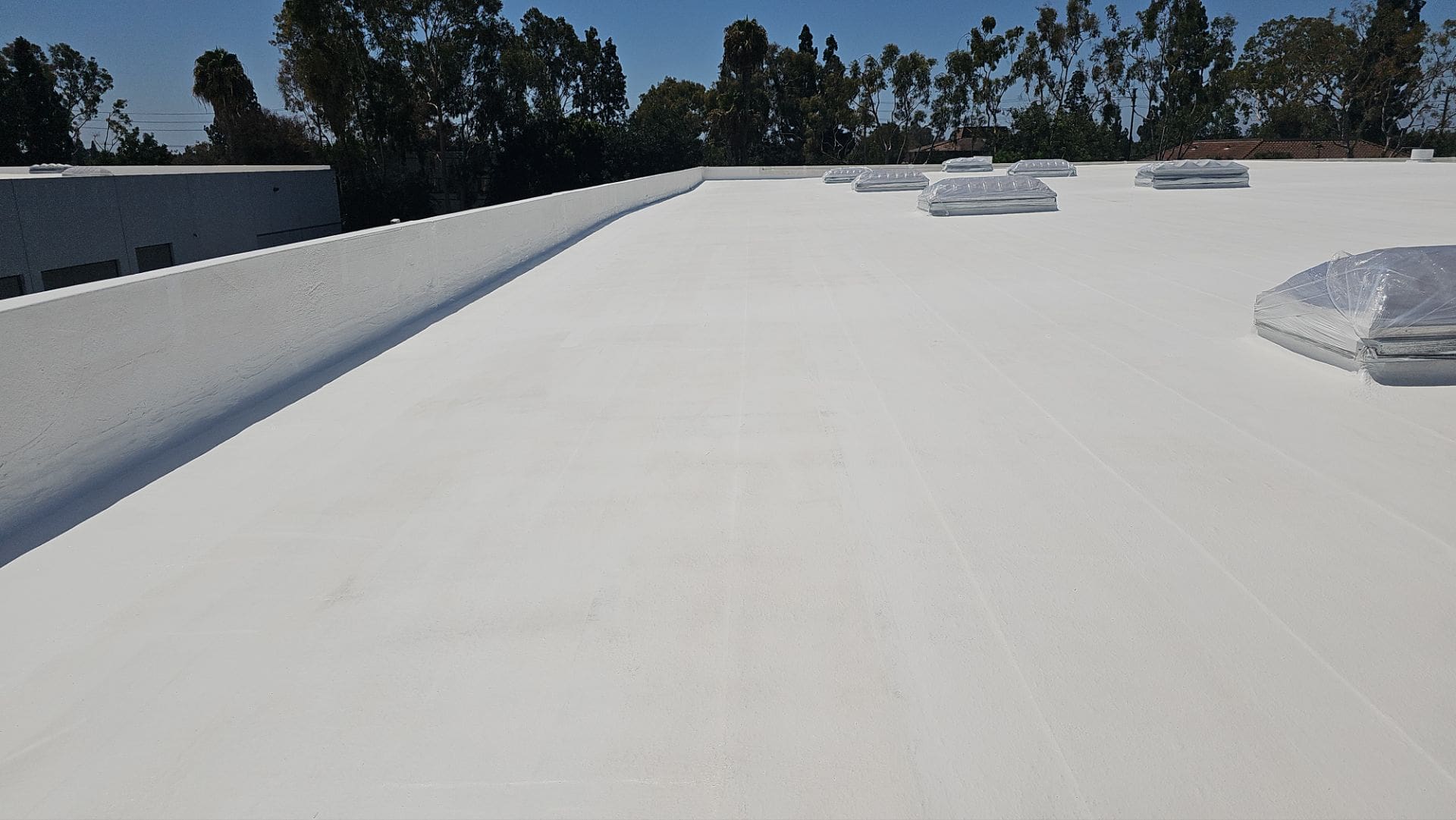
California’s climate is uniquely harsh on commercial roofing materials during the long summer months. While materials like TPO (Thermoplastic Polyolefin), PVC, Modified Bitumen, and EPDM are engineered to handle intense UV radiation and thermal cycling, they still take a beating.
Thermal Shock and Expansion
Every day, the California sun bakes commercial roof surfaces, causing materials to expand. As night falls and temperatures drop, they contract. Over months and years, this constant micro-movement creates stress at the seams, flashings, and penetrations (such as HVAC curbs, pipe boots, and skylight edges).
Dried-Out Sealants and Caulking
Elastomeric sealants and mastic around roof transitions do not last forever. Under relentless summer sun, they dry out, turn brittle, shrink, and crack. In August, a cracked seal looks harmless because no water is passing through it. But the moment wind-driven rain hits that brittle joint in November, it fails instantly.
Debris Accumulation and Clogged Drains
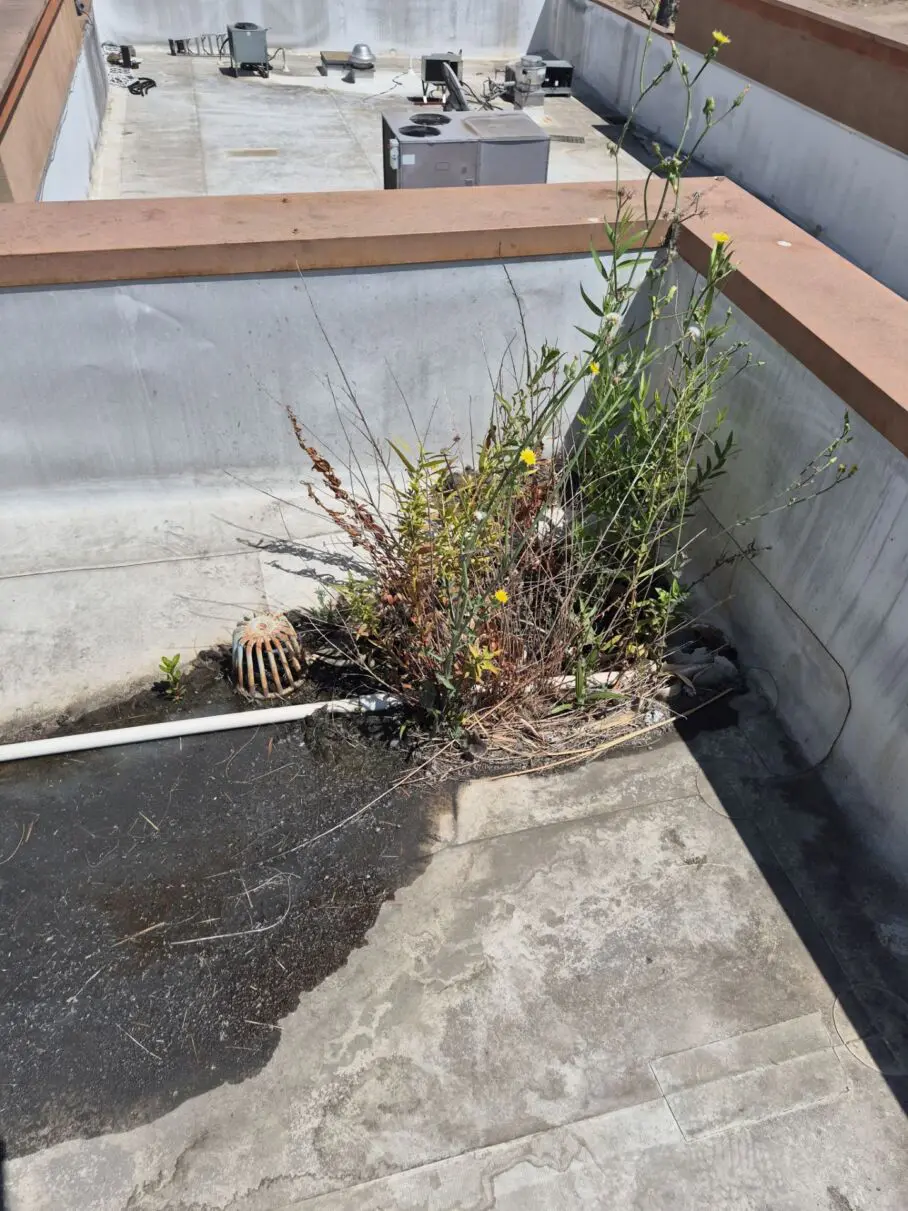
During the dry season, wind blows dust, leaves, and trash across flat commercial roofs. Scuppers and internal drains slowly collect this debris. Because it isn’t raining, nobody notices that the primary drainage path is partially blocked. When an El Niño deluge hits, that blocked drain causes water to pond, placing excessive weight on the roof structure and forcing water laterally past flashings.
What the 2026–2027 Super El Niño Means for California
El Niño is not just a standard rainy season. It alters the Pacific jet stream, steering a continuous conveyor belt of high-moisture storms straight toward the West Coast.
During typical or light rain years, a minor roof defect might allow a slow, isolated drip that maintenance teams can catch with a bucket. A strong El Niño behaves differently. It brings back-to-back atmospheric rivers. These storms drop massive volumes of water in short windows, leaving roof insulation and structural framing zero time to dry out between systems.
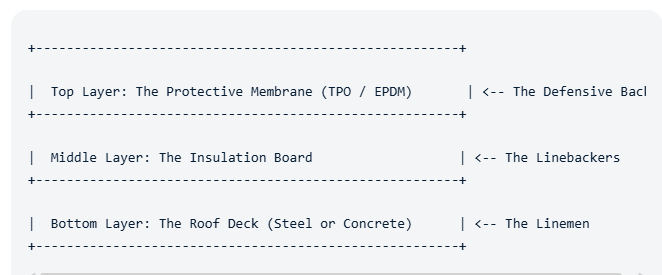
Sustained Saturation: Continuous rainfall means that if water breaches the top membrane, it continuously feeds into the underlying polyisocyanurate or fiberboard insulation. Insulation acts like a sponge, trapping water right above your metal or wood deck.
Wind-Driven Pressures: El Niño storms rarely fall straight down; they come with powerful gusty winds. Wind forces rain sideways, pushing water underneath flashing caps, up vertical wall terminations, and past coping stones where gravity alone wouldn’t normally take it.
Rapid Thermal and Structural Stress: The sudden shift from hot late-summer temperatures to cold, torrential winter downpours accelerates thermal shock on aging roof substrates.
Hidden Vulnerabilities on Commercial Flat Roofs
Unlike steep residential roofs that shed water rapidly via gravity, commercial properties feature flat or low-slope roofs. These systems rely on flawless waterproofing integrity and clear drainage mechanisms. The most common hidden failures include:
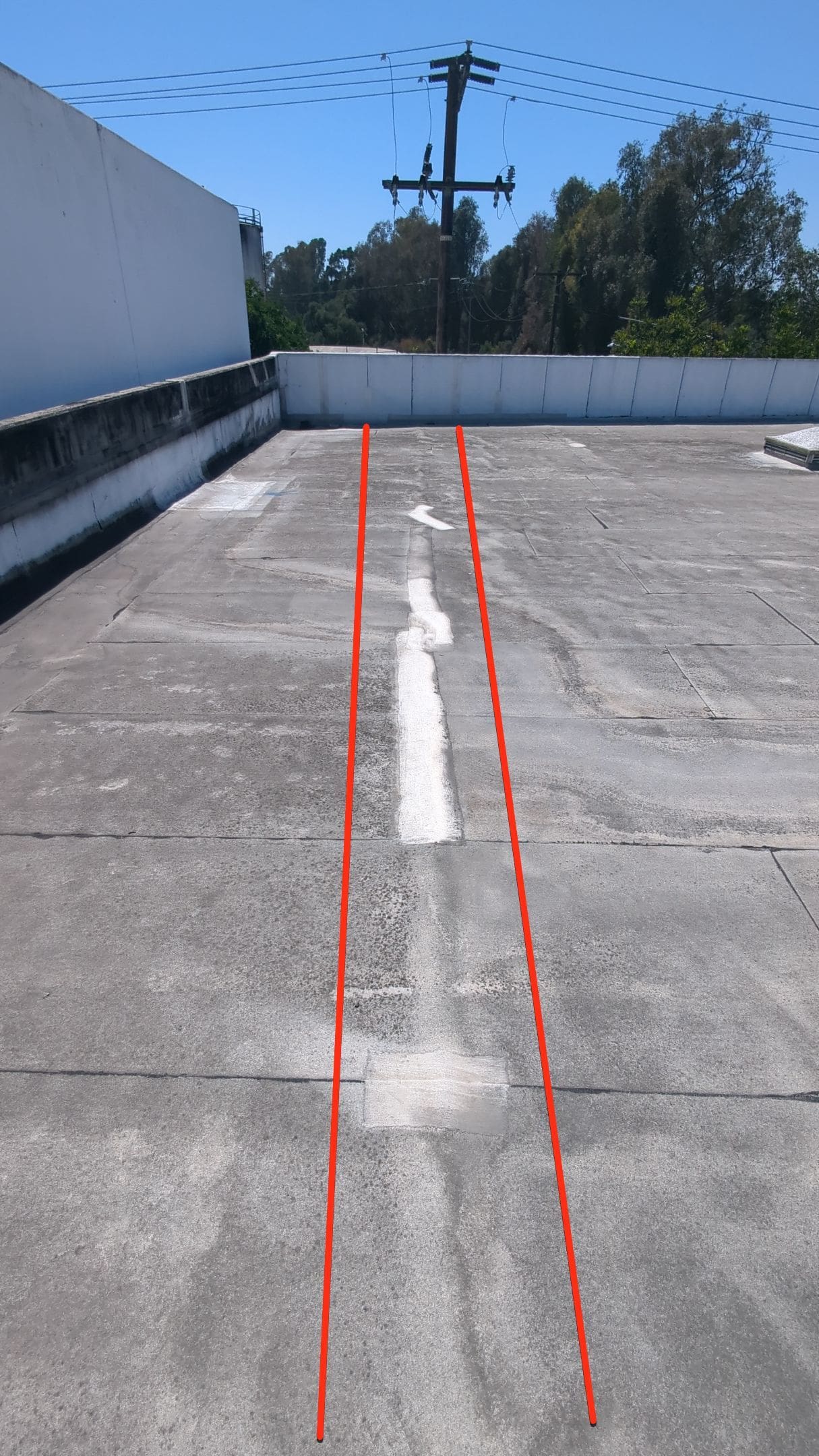
Seam Delamination: Welded or adhered seams on single-ply membranes can peel apart at microscopic levels after years of building flex and heat exposure.
Punctured Membranes: Dropped tools from servicing HVAC units or careless foot traffic from telecom technicians can leave small punctures that seal themselves shut with dust in dry weather, only to leak when water pools over them.
Flashing Failures at Parapet Walls: The transition where the horizontal roof meets a vertical wall is the #1 spot for leaks. If the counter-flashing is loose, water enters directly behind the waterproof base.
Obsolete or Damaged Roof Penetrations: Rubber pipe boots degrade and split around utility lines. Without an inspection, these splits remain invisible beneath protective hoods or behind equipment clusters.
The Domino Effect: Why a Roof Leak is an Operational Crisis
For a commercial decision-maker, viewing a roof as a simple “expense” is a mistake. A roof failure during a severe weather event triggers a cascade of costly business interruptions:
Inventory and Equipment Destruction: Water dripping into a warehouse ruins stored goods, packaging materials, or expensive manufacturing components. A single drop landing on a $100,000 server rack or medical device assembly line can paralyze your business.
Tenant Defection and Legal Liability: If you lease industrial or retail space, a leaking ceiling can trigger lease default notices, rent withholding, or lawsuits over damaged tenant property.
Mold and Indoor Air Quality Risks: Trapped moisture in ceiling cavities or drywall breeds toxic mold within 48 to 72 hours. Remediation requires tearing down walls, displacing staff, and paying for professional air scrubbing.
Emergency Repair Inflation: Trying to fix a commercial roof during an active downpour is dangerous and expensive. Emergency tarping and wet-surface patching during a peak storm cost significantly more than planned preventative maintenance done in late summer.
Why Assessing Your Roof in August/September is 5x Cheaper
Economics dictate that preventative maintenance always beats emergency remediation.
When you schedule an assessment right now (in August or September), you control the timeline. You can review proposals, select quality materials, and have certified technicians execute permanent repairs while the membrane is bone dry. Sealants cure properly, adhesives bond completely, and work happens during normal business hours without disrupting your occupants.
If you wait until January—when El Niño is dropping rain and local roofing companies have weeks-long backlogs of emergency calls—you lose all leverage. You will pay premium emergency rates, and contractors may only be able to perform temporary, stop-gap measures until the weather clears weeks later.
What a Professional Commercial Assessment Involves
A thorough commercial roof assessment goes far beyond a quick walk across the gravel. When our licensed team evaluates a facility, we follow a rigorous, diagnostic protocol.
Our 6-point roof maintenance inspection we offer to our clients includes the following six assessments:
Membrane Integrity Analysis: Identify seam failures, punctures, blistering, weathering, and membrane deterioration before they become leaks.
Roof Surface & Substrate Assessment: Evaluate the roof surface for soft areas, ponding water, localized deflection, deteriorated insulation, and other visible conditions that may indicate underlying roofing deficiencies.
Flashing & Perimeter Inspection: Inspect parapet walls, coping, counterflashing, expansion joints, and termination points—the most common sources of roof leaks.
Rooftop Equipment & Penetration Review: Evaluate HVAC curbs, pipes, vents, skylights, and equipment flashings to help ensure the building envelope remains watertight.
Drainage Performance Assessment: Inspect drains, scuppers, gutters, overflow systems, and roof slope to identify ponding conditions and drainage deficiencies that accelerate roof deterioration.
Roof System Performance Evaluation: Assess the overall condition of the roofing system, including weathering, aging, previous repairs, and maintenance history to estimate remaining service life and identify opportunities to improve long-term roof performance.
But make sure that whoever conducts your roof maintenance inspection provides a comprehensive report.
Following the above assessment we provide an eightfold report includes the following:
Comprehensive roof condition report
High-resolution annotated photographs
Documented deficiencies and observations
Recommended corrective actions
Estimated roof service life
Repair priority ranking
Capital Planning Assistance: We will build you a multi-year budget forecast for your roof, making it easy for you to present funding requests to executives or board members
Proactive Maintenance Program: A complimentary first year of preventative maintenance for multi-year service agreement program enrollees
Disclaimer: Keep in mind with these assessments, they consist of a visual inspection of accessible roof areas and is intended to evaluate the observable condition of the roofing system. It is not a structural engineering evaluation or an invasive investigation. Conditions concealed within the roof assembly or building structure may require additional evaluation by the appropriate design professional.
Your roof is safe with us here at Saddleback Roofing. We are licensed, insured, and bonded. We’ve been in business since 1956. We have 70 years of experience. We are a large, full service commercial roofing company (in fact if you or someone you know is in need of residential roofing repair and replacement we can help with that too).
When you’re ready to get your roof inspected, keep in mind that we are currently offering our 6-Point Commercial Roof Asset Preservation and Compliance Assessment + Report for FREE (this is normally $1,450). This is LIMITED to schedule availability and it does EXPIRE September 30, 2026.
If you’d like to get on our schedule click HERE and it will take you to our 6-Point Commercial Roof Asset Preservation and Compliance Assessment + Report schedule page.
The schedule page is quick and simple. However, if you need clarification or would like to speak with a real person, you can reach me directly:
David Price, VP of Sales & Marketing
Call or text: 951.530.0881
Email: david@saddlebackroofing.com
Take Action Before the Weather Changes
The forecasts are clear, and the warning signs from atmospheric scientists point to a high-impact winter. The sunny days of late August 2026 offer a brief, critical window of opportunity. Do not wait for the first autumn storm to find out where your commercial roof falls short.
Protect your building, safeguard your inventory, and keep your operational budget under control by staying ahead of the weather.
Delay, and you’re treating your building like a camel that thrives on desert heat, completely forgetting that it is actually an expensive, oversized cardboard box with a target painted on top. When those atmospheric rivers finally hit, they won’t just knock politely on your gutters; they will arrive like an uninvited rock band crashing through your living room ceiling.
That tiny, hidden hairline crack you ignored all summer will suddenly morph into an ad-hoc indoor water park, transforming your corporate conference room into a scenic, indoor waterfall feature. While your tenants are busy using trash cans as umbrellas and staging impromptu kayaking races down the main hallway, you will be frantically calling roofing companies whose phone lines are more jammed than the 405 at rush hour. Checking your roof today might feel like wearing a winter parka to the beach, but it beats spending your December explaining to your board why the office carpet has developed its own thriving ecosystem.
Schedule Your
Free 6-Point
Commercial Roof Asset Preservation
and Compliance Assessment + Report
Prevent Failures Before They Disrupt Your Business!
Email: info@saddlebackroofing.com
Phone: (833) 766-3012
This offer is LIMITED to schedule availability
***(Normally $1,450) Available inspection spots are filling up quickly